
Art trivia is one of the least reliable subjects on the internet. A story gets repeated until repetition becomes evidence, and the version everyone knows quietly replaces the version that happened. Here are five famous painting myths that refuse to die, and what the record actually says.
1. Van Gogh sold only one painting in his life
This is the most repeated fact about any artist, and it is not true. He sold more than one. The Van Gogh Museum’s position is that we do not know exactly how many — the records are incomplete — but at least two paintings and several drawings were sold, and his uncle commissioned work from him. The myth was challenged decades ago and refuses to die.
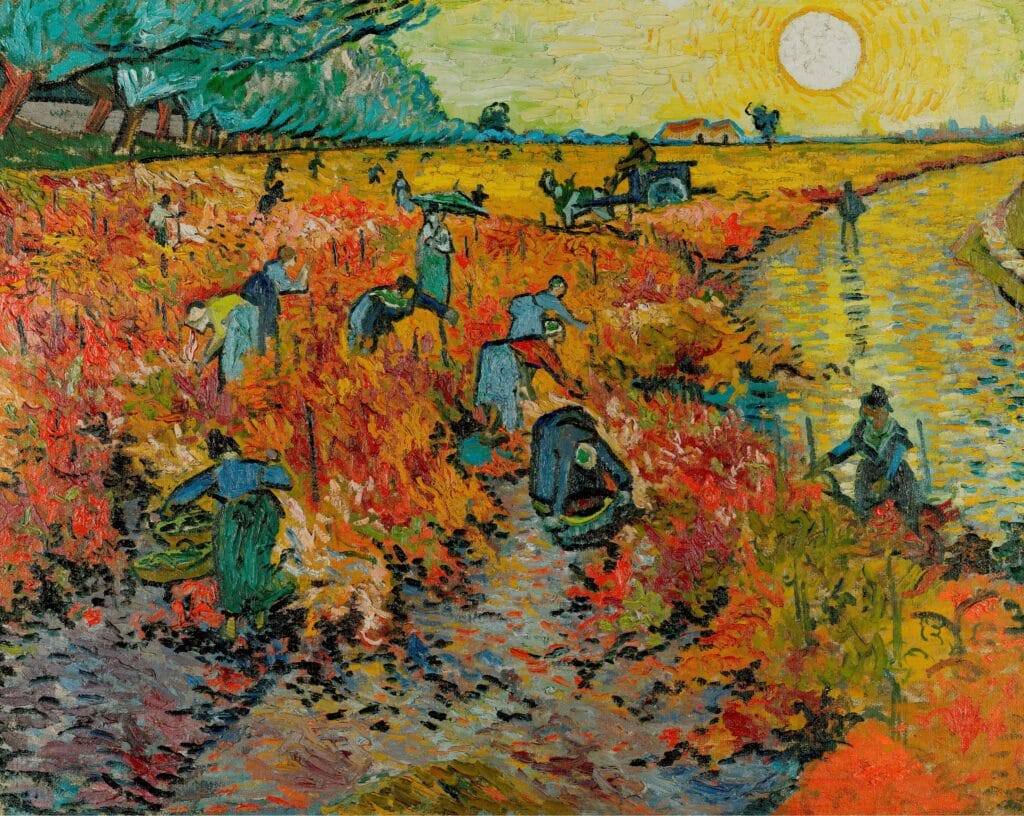
What is true is that The Red Vineyard at Arles is the one documented sale with a name attached, bought by the Belgian painter Anna Boch. That single identifiable transaction hardened into “he sold one painting”, which is a different claim.
The underlying point survives intact, and it is the reason the myth is so durable: he was commercially unsuccessful, he was supported by his brother Theo, and recognition arrived after his death. That version is sad enough without the embellishment.
2. The Mona Lisa was always the most famous painting in the world
She was not. Before 1911 the Mona Lisa was a respected Leonardo in the Louvre’s Salon Carré, admired by artists and critics and written up in guidebooks — but she was one treasure among many, and visitors did not queue for her.
On 21 August 1911 a former Louvre employee, Vincenzo Peruggia, walked out with her under his clothes. The painting was missing for over two years. Newspapers ran the story worldwide; Picasso was questioned and released; crowds came to the Louvre to look at the empty wall where she had hung.
She came back in 1913 to a level of fame she had never had before. The theft did not make a good painting good. It made a known painting universal.
3. The figure in The Scream is screaming
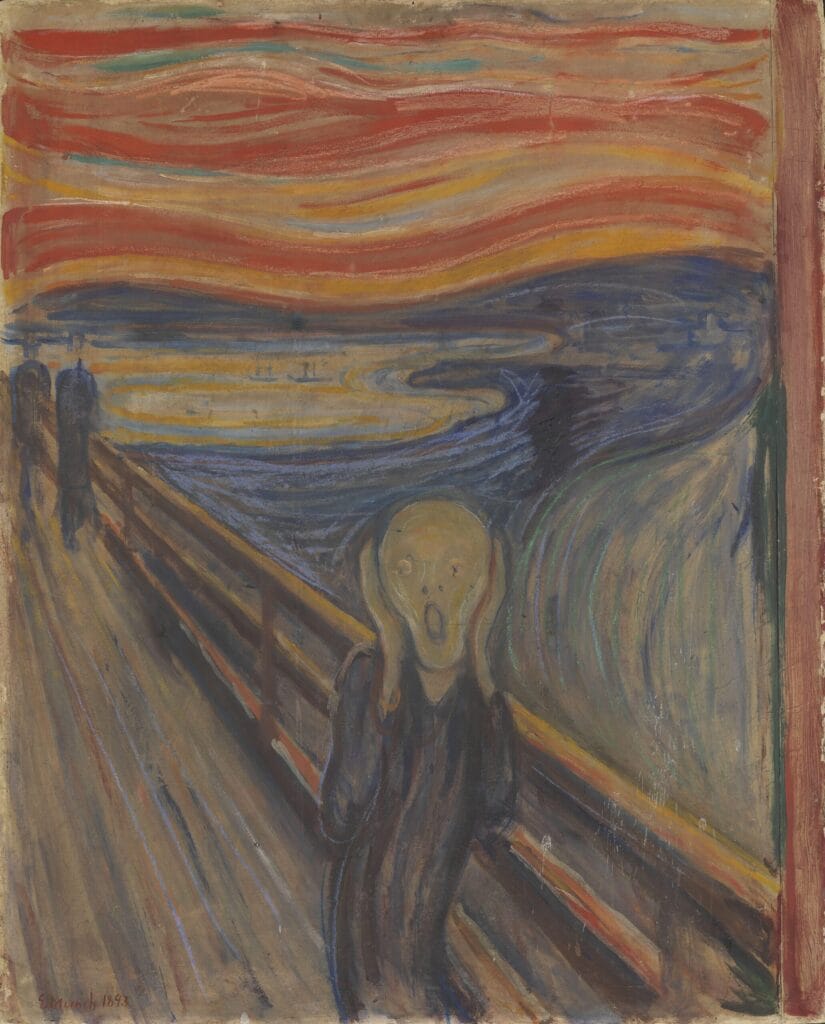
It is not. It is covering its ears. Munch’s own diary entry, headed Nice, 22 January 1892, describes walking at sunset when the sky turned blood red and he sensed an infinite scream passing through nature. The scream belongs to the landscape. The figure is the one hearing it.
The original German exhibition title makes the same point: Der Schrei der Natur — the scream of nature. Your product page carries that title too, because it is the accurate one.
In fairness, this is not unanimous. A former director of the Munch Museum has said it could be read either way, and that interpretation is legitimately open. But the painting is not a portrait of someone having a breakdown, which is how the emoji and the merchandise read it.
4. The Night Watch is a night scene
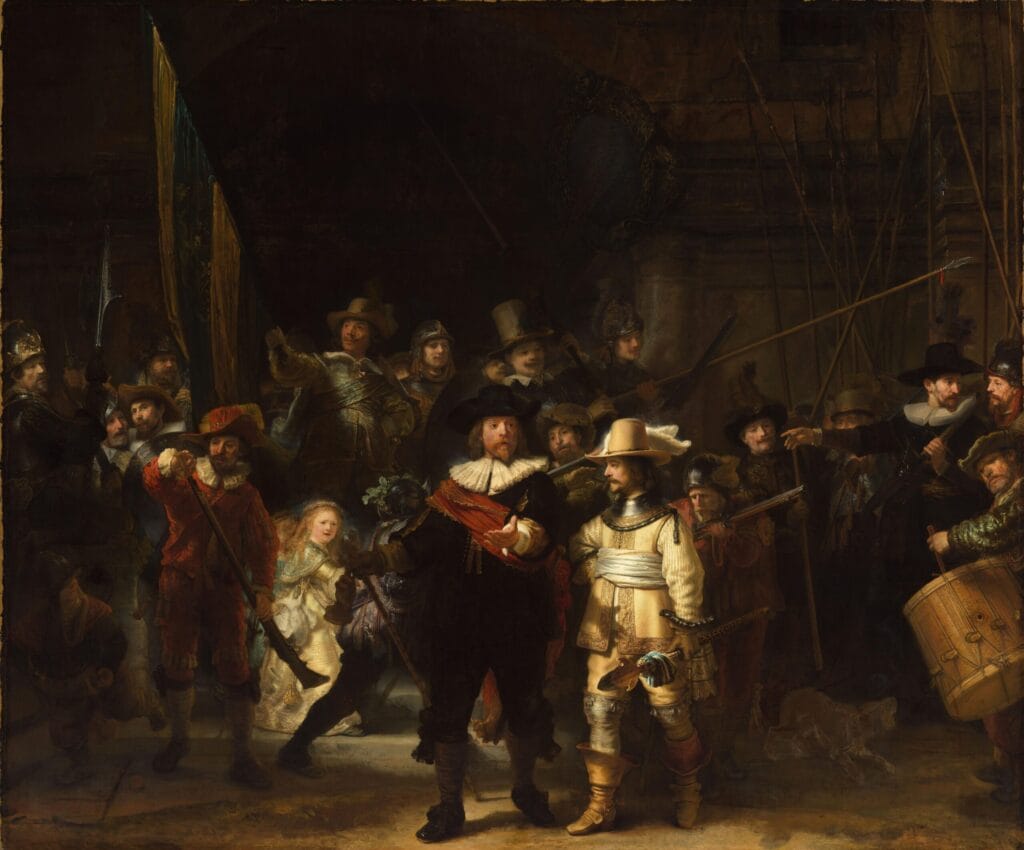
It is a daytime scene. Rembrandt never called it The Night Watch; the painting had no fixed title and the nickname only appears in a document in 1797. By then layers of varnish had darkened so badly that the picture genuinely looked nocturnal. Cleaning in the twentieth century revealed daylight underneath. The wrong name had already stuck.
There is a second, stranger fact in the same painting. In 1715 it was moved to Amsterdam Town Hall and had to fit between two doors, so it was cut down — most severely on the left. The Rijksmuseum notes the removed canvas was never preserved. Figures were lost. The composition everyone knows is off-centre because of a doorway.
We know what was missing only because a seventeenth-century copy by Gerrit Lundens recorded the full composition. In 2021 the Rijksmuseum used that copy to reconstruct the lost strips and hung them around the original.
5. Van Gogh cut off his earlobe
For most of a century the scholarly consensus was that he cut off part of the left ear — Paul Signac, who visited him in hospital, wrote that it was the lobe and not the whole ear.
Then in 2010 the researcher Bernadette Murphy found a note in an American archive, drawn in 1930 by Félix Rey, the doctor who treated him in Arles. It is a before-and-after diagram showing the cut, and it shows almost the entire ear gone, leaving only a small remnant. The Van Gogh Museum revised its position after her work was published.
It is worth being honest about the limits: Rey drew it forty years after the night in question, and not every scholar treats the matter as closed. But the best surviving evidence is a diagram by the man who dressed the wound.
Why any of this matters
These are not corrections for their own sake. Each one changes what you are looking at. A painting cut to fit a door is a different object from one composed the way it hangs. A figure blocking out a sound is a different picture from a figure screaming.
You can see all four works here in Portraits & Figures, Abstract & Modern and Life & Places — and we have tried, throughout the catalogue, to describe them as they are rather than as the story goes.